


GENERAL INQUIRIES
info@forward.oneMARKETING INQUIRIES
media@forward.oneINVESTOR RELATIONS
ir@forward.one
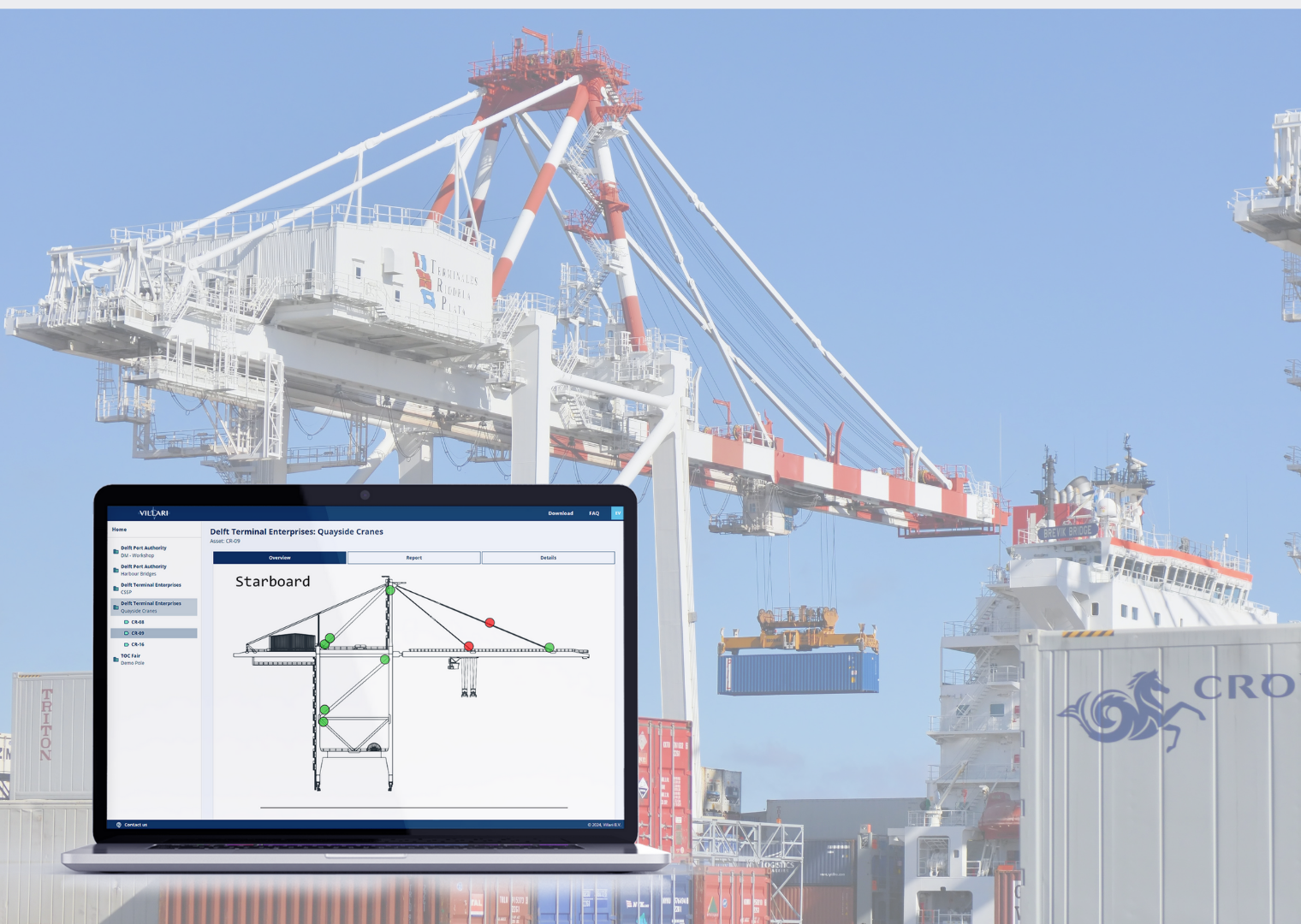
Scaling is the real differentiator in deeptech, and nowhere is that more evident than in asset-intensive industries like ports, steel production, and critical infrastructure. These sectors reward reliability, trust, and execution under real operational constraints.
Villari understands this world. And they are building for it.
In industries where assets are expected to last decades and failure carries real-world consequences, innovation earns its place slowly. Safety margins are tight. Downtime is expensive. Procurement cycles are long. Inspection and maintenance regimes are deeply embedded.
This changes the rules of scaling. New technology is adopted because it integrates and proves continuity. It becomes part of how work gets done every day.
For deep-tech founders, this is often the hardest transition to make.
Villari originated as a university spin-off, developing a novel wireless sensing technology capable of detecting fatigue and crack growth in steel structures. The science was strong. But that alone was never enough.
From the start, the question was whether the science could be deployed repeatedly, maintained reliably, and trusted globally; across ports, steel plants, and infrastructure operating in harsh conditions.
That meant building a system that:
In short: technology designed for operations.
Industrial sectors operate under fundamentally different innovation dynamics:
Villari deliberately positioned its solution as a complementary layer; enhancing asset integrity strategies rather than competing with them. That choice matters because it lowers adoption friction. It builds trust. And it accelerates long-term scale.
One of Villari’s most important strategic decisions was how they went to market.
Instead of scaling alone, they partnered with established industry leaders such as MISTRAS Group and Control Union which are organizations that operators already trust with inspection, testing, and maintenance of critical assets.
These partnerships are the credibility engines.
By embedding continuous fatigue monitoring into workflows that already exist, Villari accelerates adoption without forcing customers to change how they operate. In conservative industries, this approach is decisive.
Trust enables scaling.
Villari’s transition from innovation to execution is visible across multiple dimensions:
These indicate a company moving from early adoption into a mature growth phase, where scaling is driven by repeatability.
As Villari has grown, its internal focus has shifted accordingly.
Early-stage deep tech is about proving possibilities. Growth-stage industrial tech is about delivering consistency.
Execution today means:
This transition is where many deep-tech companies stall. Villari is moving through it deliberately.
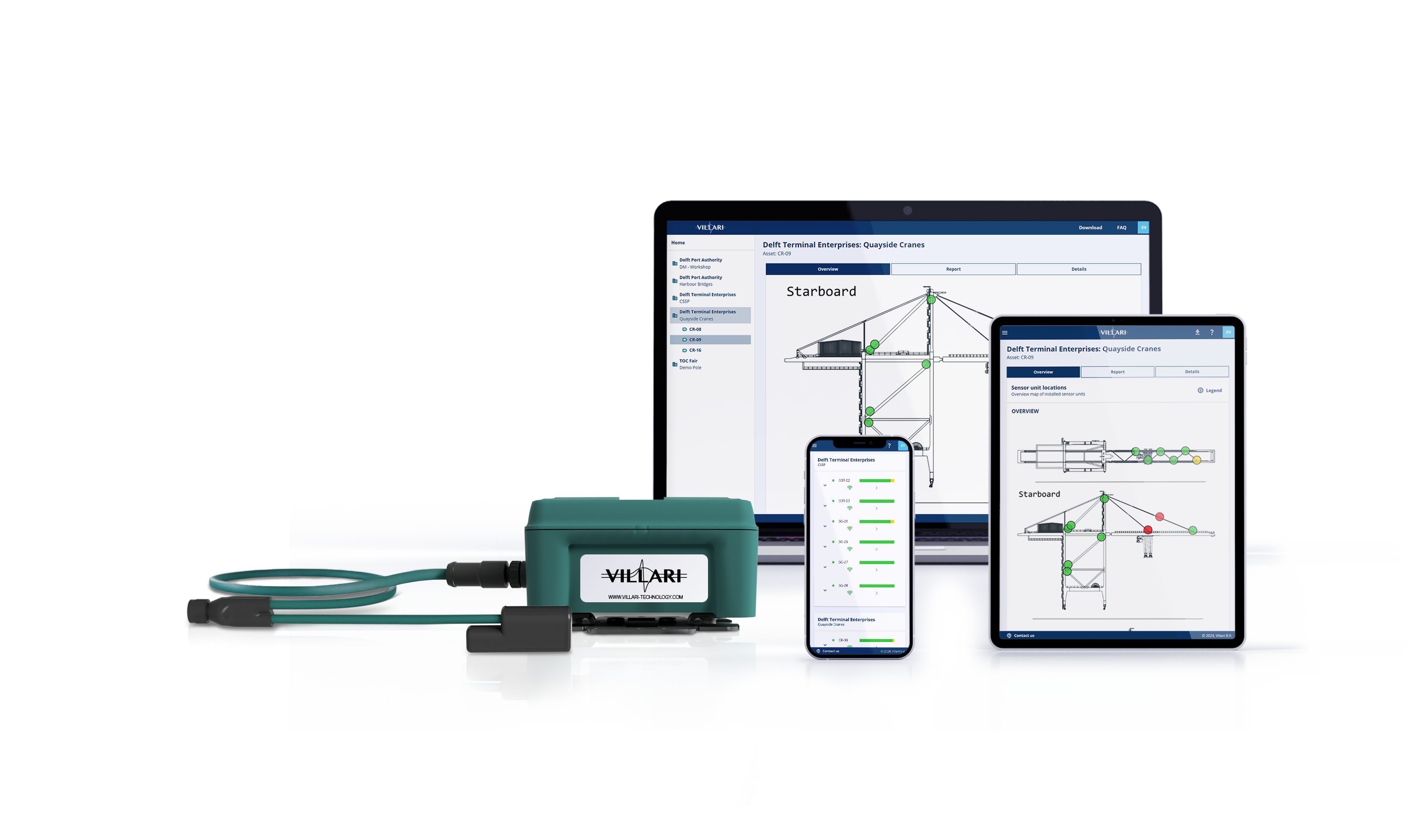
At FORWARD.one we invest in companies that can commercialize complex technology into scalable, investable, market-leading businesses.
Villari represents what we look for:
In asset-intensive industries, innovation must earn its place. Scaling reliably. Villari is doing exactly that.
“We back founders who’ve built solutions that don’t just demo well, they scale into real operations because the value add is undeniable. Villari has proven exactly that: embedding into conservative inspection regimes, earning trust in safety-critical environments, and translating a compelling customer business case into repeatable, long-term deployments.”
Boy de Jonge, Investment Manager.
Read Villari’s story here: https://www.villari-technology.com/post/scaling-deep-tech-in-well-established-industries-is-the-real-differentiator
Europe’s industrial base is one of its greatest competitive advantages, and one of its hardest innovation environments. Long asset lifecycles, strict safety requirements, and conservative procurement processes create high barriers to entry for new technology. But they also create strong moats for companies that succeed.
What we see across the ecosystem is a shift: deep tech moving from “interesting” to indispensable. The winners are those who integrate into existing systems and quietly become infrastructure. This demands patience, operational excellence, and a different definition of speed.
Villari fits this pattern. Their progress reflects a broader truth about scaling industrial deep tech in Europe: credibility compounds. Trust unlocks scale. And execution beats novelty every time.
“Technology without commercialization is just expensive science.”


